
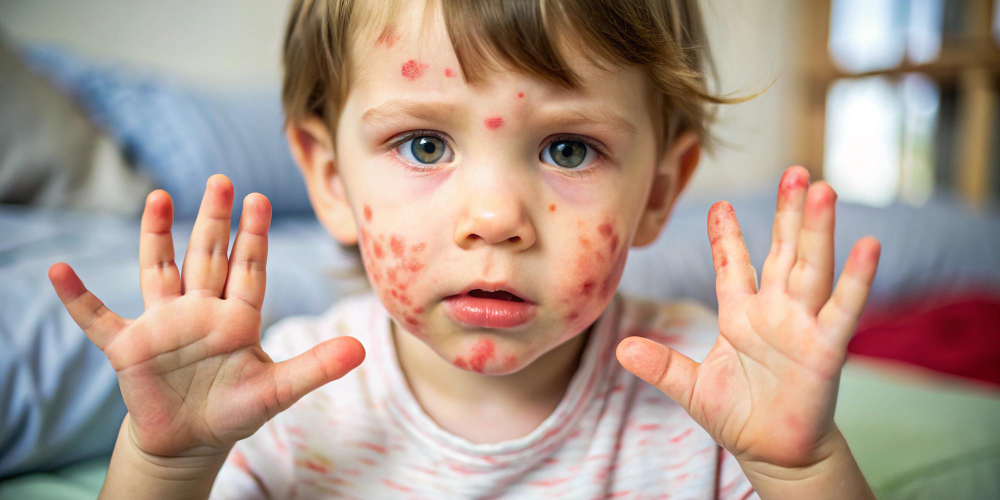
What Is Hand Foot Mouth Disease in Children?
Hand foot mouth disease in children is a common illness. It mainly affects young kids, especially those under age five. This disease is caused by viruses, most often the coxsackievirus. In the United States, outbreaks can happen in schools and daycare centers. Although it sounds scary, most children recover quickly. However, knowing the signs and care steps helps parents feel prepared.
Common Symptoms of HFMD
Usually, HFMD symptoms start with a mild fever. Soon after, children may feel tired and lose their appetite. Next, a sore throat often appears. Within a few days, small red spots show up on the hands, feet, and inside the mouth. Sometimes, these spots turn into tiny blisters. In some cases, a rash may also appear on the legs, arms, or buttocks. For example, your child might complain of mouth pain or refuse to eat.
Causes and Risk Factors
HFMD spreads easily from person to person. The viruses pass through saliva, mucus, or fluid from blisters. Children can catch it by touching toys, doorknobs, or surfaces with the virus. Because young kids often put their hands in their mouths, they are at higher risk. In addition, close contact in daycare centers or schools increases the chance of outbreaks. Although adults can get HFMD, it is much less common.
How HFMD Is Diagnosed
Doctors usually diagnose HFMD by looking at the child’s symptoms and rash. Often, no special tests are needed. However, if the symptoms are unusual, a doctor may take a throat swab or stool sample. This helps rule out other illnesses. For most families, a simple exam is enough to confirm HFMD.
Treatment Options and Home Care Tips
There is no cure for HFMD, but most children get better on their own. Usually, symptoms last about seven to ten days. During this time, home care can help your child feel more comfortable. For example, you can offer cold drinks or soft foods to ease mouth pain. Additionally, over-the-counter pain relievers like acetaminophen can lower fever and reduce discomfort. However, never give aspirin to children.
Prevention Strategies for Families
Because HFMD spreads quickly, prevention is important. Washing hands often is the best way to stop the virus. Teach children to wash their hands after using the bathroom and before eating. In addition, clean toys and surfaces often, especially during outbreaks. If your child is sick, keep them home from school or daycare until the fever and blisters are gone. This helps protect other children.
When to Seek Medical Attention
Most cases of hand foot mouth disease in children are mild. However, sometimes problems can develop. For instance, if your child cannot drink fluids, has a high fever for more than three days, or seems very sleepy, call your doctor. Also, if you notice signs of dehydration like dry mouth or fewer wet diapers, seek help right away. Rarely, HFMD can cause more serious issues, so it is always best to check with a healthcare provider if you are unsure.
Conclusion
If you have questions about your child’s symptoms or need support, Arya Children’s clinic is here to help. Book a visit today to get expert care and peace of mind for your family.