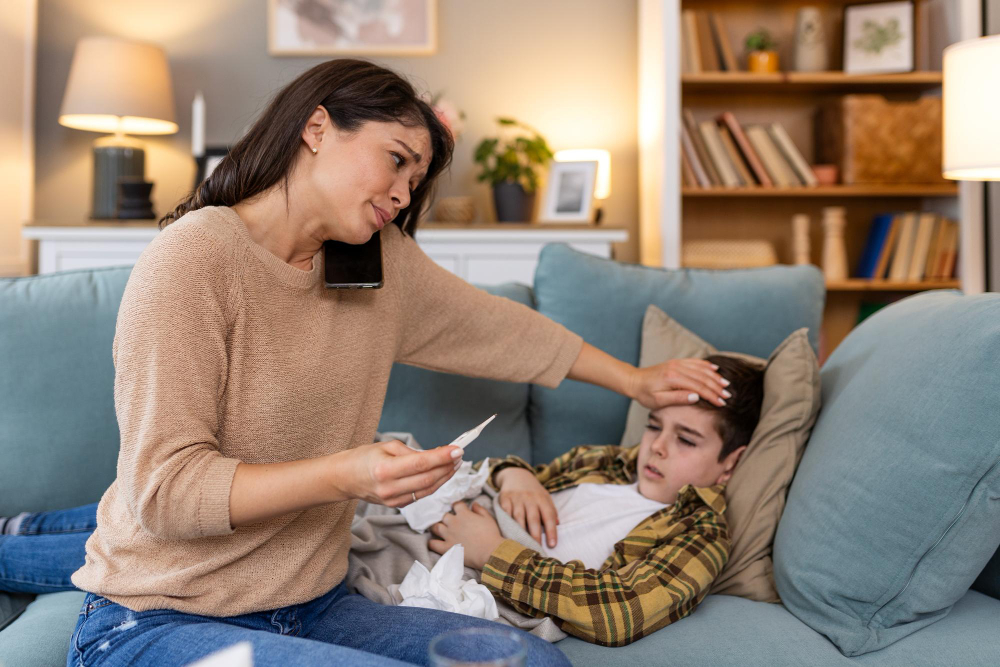
Fever in children is a common concern for many parents. It can be scary to see your child’s temperature rise. However, not all fevers mean something serious. Childhood fever often signals that the body is fighting an infection. In most cases, a mild fever is normal. Still, it is important to know when to see a doctor. This guide explains what fever in children means, what causes it, and when parents should worry.
What Is a Fever in Children?
A fever is when a child’s body temperature goes above the normal range. For most children, a normal temperature is between 97°F (36.1°C) and 99°F (37.2°C). Usually, doctors consider a temperature of 100.4°F (38°C) or higher as a fever. The body raises its temperature to help fight germs. So, a fever is often a sign that the immune system is working.
Common Causes of Fever in Children
Many things can cause a fever in children. Most often, it is due to infections. For example, colds and flu are common reasons. Sometimes, children get a fever after getting vaccines. Less often, fever can be caused by other health problems. Here are some typical causes:
When Is a Fever Considered Normal?
Often, a mild fever is a normal part of childhood. The body uses fever to fight off germs. For example, if your child has a cold, a low fever is expected. As long as your child is active, drinking fluids, and seems comfortable, the fever is usually not dangerous. In fact, mild fevers help the body heal. But, it is wise to watch for any changes.
Warning Signs: When Should Parents Worry?
Sometimes, a fever can signal a more serious problem. Therefore, parents should look for warning signs. If you notice any of the following, contact your doctor right away:
If you are unsure, it is always better to ask your doctor for advice.
How to Care for a Child with Fever at Home
Most fevers can be managed at home. First, keep your child comfortable and dressed in light clothing. Offer plenty of fluids, such as water or clear soups. Because rest helps the body heal, encourage your child to relax. You may use a cool, damp cloth on the forehead to help lower the temperature. If your child feels uncomfortable, you can give acetaminophen or ibuprofen, but always follow the dosing instructions. Never give aspirin to children, as it can be harmful. If you have questions about medicine, ask your doctor or pharmacist.
Prevention and When to Consult a Doctor
While you cannot prevent every fever, you can reduce the risk by teaching good hygiene. For example, encourage handwashing and keep your child’s vaccines up to date. Avoid close contact with sick people when possible. However, if your child has a fever and you notice any warning signs, seek medical help. Also, if you feel worried or unsure, it is okay to call your doctor for guidance.
Conclusion
To sum up, fever in children is common and often not serious. Usually, it is a sign that the body is fighting an infection. Still, parents should watch for warning signs and know when to seek help. If you are concerned about your child’s fever, consult a pediatrician at Arya Children’s Clinic for personalized advice.